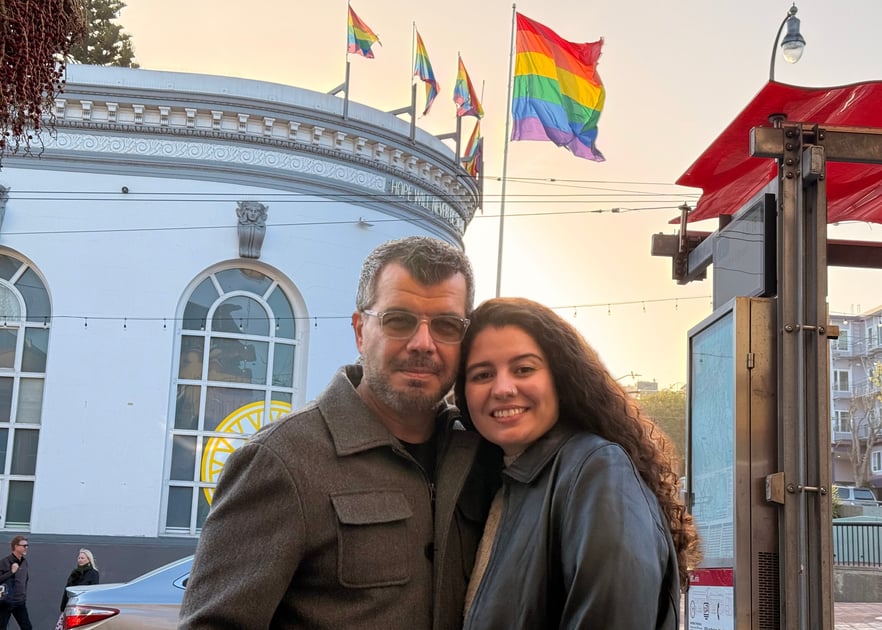
Marcos Apolonio, DSW, LCSW, has joined Palo Alto University as a new Assistant Professor in the clinical Master of Social Work (MSW) program, bringing a life story that spans countries, communities, and a deep commitment to the power of human connection.
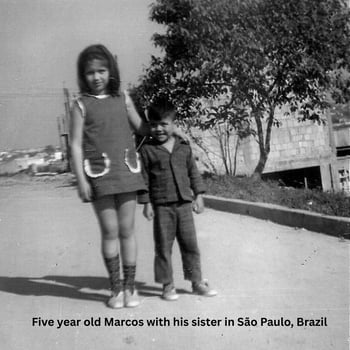
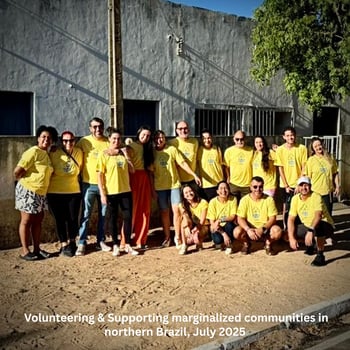
Raised in Brazil in a low‑income family, Apolonio grew up in environments where people relied on one another to navigate hardship and uncertainty. Those early experiences shaped his lasting belief that relationships, belonging, and shared meaning are central to wellbeing. In 2003, facing questions about identity and belonging, he left Brazil for the United States as an immigrant and asylee, rebuilding his life while remaining closely connected to his children from afar, a period he describes as both difficult and transformative. Social work, he says, helped him “come full circle,” drawing together his community experience, parenting, and earlier leadership roles into a new professional path.
In the Bay Area, Apolonio discovered that social work offered exactly the blend he was seeking. “I found social work, and I thought that social work was really a great match,” he explains, “because it has the combination of the community life, community beauty, and the mental health as well.” He completed his MSW at CSU East Bay, became a licensed clinical social worker, and spent many years at the Rainbow Community Center in Concord, moving from intern to clinician to case management program director while working extensively with LGBTQ+ communities.
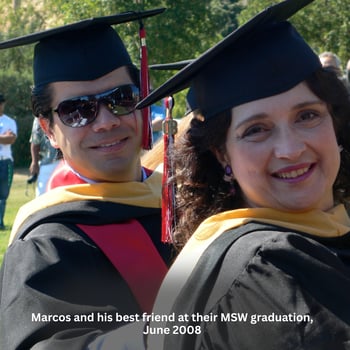
Mentorship played a pivotal role in his development. At Rainbow, Executive Director Dr. Ben Barr recognized his potential and steadily invited him into more responsibility, including teaching and training. “You don’t know what you’re capable of,” Apolonio reflects. “Especially when you are coming from loss and trauma, having someone who believes in you, who sees your potential, and helps…he made a huge difference.” That encouragement led Apolonio into academia as an adjunct instructor at CSU East Bay and eventually to the Doctorate of Social Work program at the University of Pennsylvania, where he studied with social workers from across the country. The experience confirmed how deeply he had been shaped by Bay Area values of diversity and inclusion, and by practice rooted in community and equity.
Apolonio’s connection to teaching began when he joined CSU East Bay as a lecturer and later as a Field Faculty Liaison, supporting MSW student practicums and internships while maintaining his private practice. He also became a Field Faculty Liaison for the MSW program at San Jose State University. Over time, he followed the development of PAU’s new MSW program closely. “The more I learned about it, the more interested I got,” he says, noting that the Assistant Professor role felt like “a great combination of what I do and what the program was looking for.” He is particularly drawn to PAU’s integration of multiple mental health disciplines and its collaborative culture. “We are working with the human mind,” he notes. “We can complement each other, support each other, instead of trying to say who is better, who is worse, which is not the case at all.”
He also values the character of a newer, smaller program, where communication is more direct and relationships feel personal. He highlights the MSW program’s quarterly immersion sessions—when students and faculty meet in person at the start of each term—as especially meaningful. As long as relationships are only virtual, he says, “it seems like that person’s not really real.” Meeting face‑to‑face “reinforces the idea that we are there for them whenever they need. They’re not alone,” and helps create stronger cohesion within each cohort.
In his teaching, Apolonio tells students that in social work and mental health, “you are your own work instrument,” emphasizing that who they are—including their histories, identities, and values—deeply shapes their practice. He is open about the questions students naturally bring: Will I burn out? Will this work for me? Can I really support clients and make a difference? Part of his role, he believes, is to share why he loves this field and how it has sustained him over time, even when “it feels like the world is coming apart.”
Spirituality is one of the threads he weaves into that conversation, defined broadly as how people connect with themselves, others, and a sense of meaning. He notes the evolution from biopsychosocial to biopsychosocial‑spiritual assessment as recognition that “there is a component of the human nature that
is spirituality” and that it can be crucial for people in crisis. For Apolonio, this perspective invites students 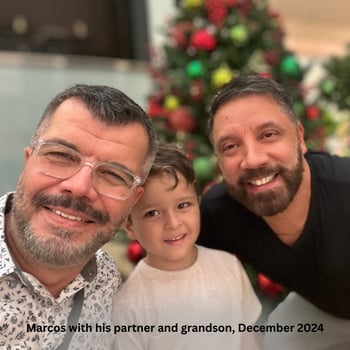 to attend not just to interventions, but to how they show up with clients as whole people.
He also reminds students that the clinical encounter is reciprocal. “You are not there to give, but you are there to interact and learn through the exchange ,” he says, describing the privilege of being invited into lives and experiences very different from his own. Each client, and each student, opens “a world that you have never seen if that was not for this person who is sitting right there.”
As he steps into his role as Assistant Professor in PAU’s MSW program, Apolonio brings the perspective of an immigrant, asylee, father, clinician, scholar, and educator grounded in community. For students entering the profession at a time of significant social strain, his presence offers both realism and hope, a reminder that their own stories, thoughtfully understood, can become powerful tools for change.
To learn more about Marcos, visit his faculty profile page.
To learn more about the MSW program, click here.
.png?width=352&name=Group%20Photo%20@%20MTV%20061026%20(1).png)