
Mental Health Courts adhering to the Risk-Need-Responsivity Model lower recidivism risk
The Risk-Need-Responsivity model may be an effective case management approach for MHCs


Shame and Guilt are Important to the Understanding of Psychopathy and Psychopathology in Juveniles
For juveniles, shame is positively related to psychopathic behaviors while guilt is


Investigator Knowledge of Witness Interviewing Techniques: Awareness, Use, and Training
Law enforcement interviewers are generally aware of the difference between productive and


No Racial Bias in Response to Juvenile Probation Violations
No systematic pattern of racial discrimination appears to exist post release in

Interactive Training System Successful for Child Interviewers
A computer-based, interactive training system demonstrates promising results for investigative interviewers of

The Role of Callous-Unemotional Traits within Adolescent Group Offending
Callous-Unemotional (CU) traits are associated with a greater likelihood of adolescents offending
Psychological Assessments for Aboriginal Offenders may be Culturally Biased
The Correctional Service of Canada faces an order to stop using key


Harry Kennedy 2014 IAFMHS Keynote Address
Dr. Harry Kennedy presents keynote address on Active Management of Length of
CPORT shows Predictive Accuracy for Sexual Recidivism among Adult Male Child Pornography Offenders
The Child Pornography Offender Risk Tool (CPORT) was significantly associated with sexual
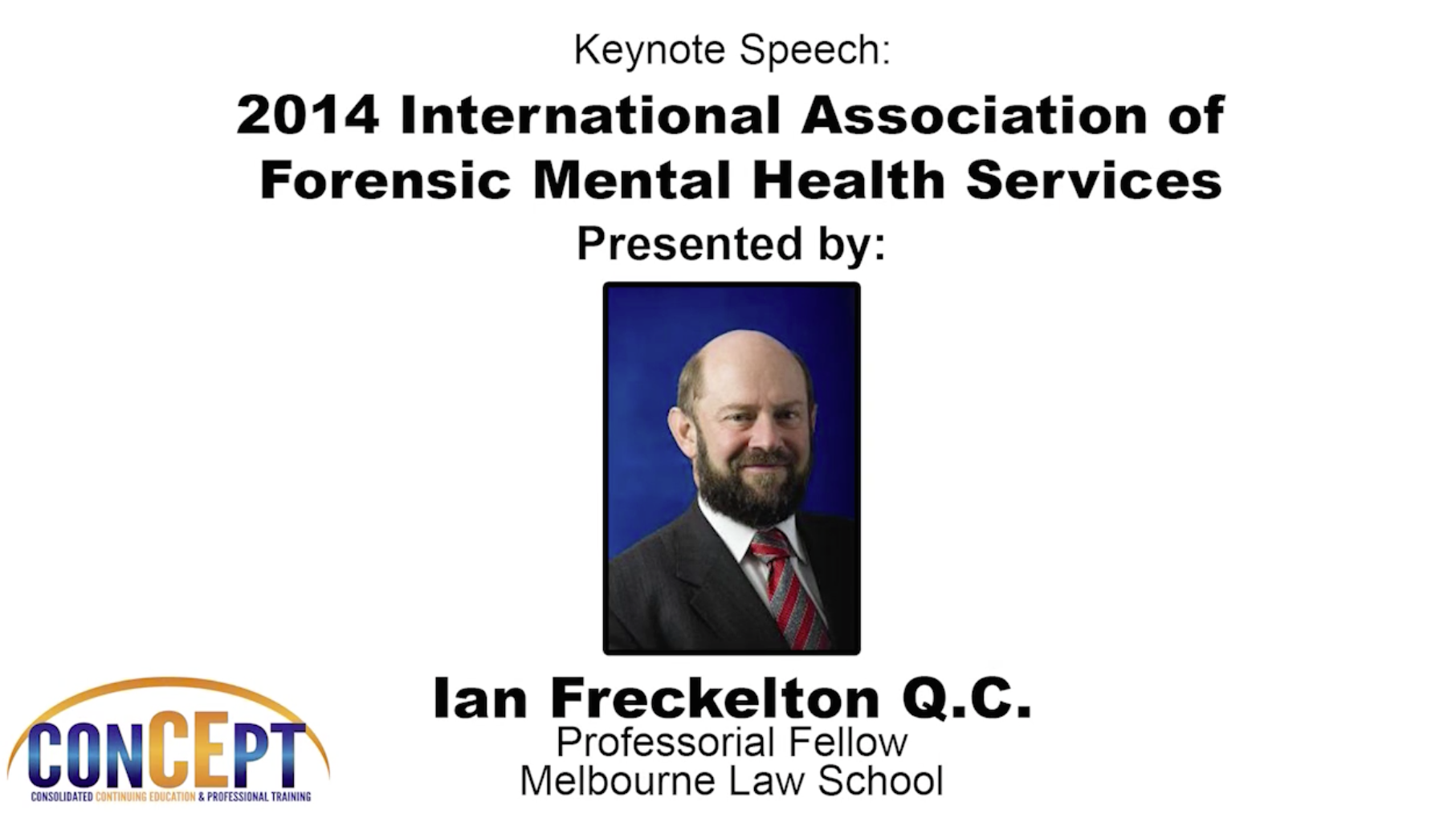
Ian Freckelton 2014 IAFMHS Keynote Address
Dr. Ian Freckelton presents keynote address on Not Guilty by Reason of

START Reveals Gender Difference in Prediction of Inpatient Aggression and Self-harm
The START is a better predictor of aggression and self-harm in women

Michael Perlin’s Keynote Address on International Disability Law
Professor Michael Perlin presents the keynote address on International Human Rights and