Palo Alto University Sees Double-Digit Growth in New Students as Interest in Behavioral Science Rises
As AI reshapes the future of work, more students are choosing Palo Alto University to study human behavior and prepare to meet the mental health needs of their communities.
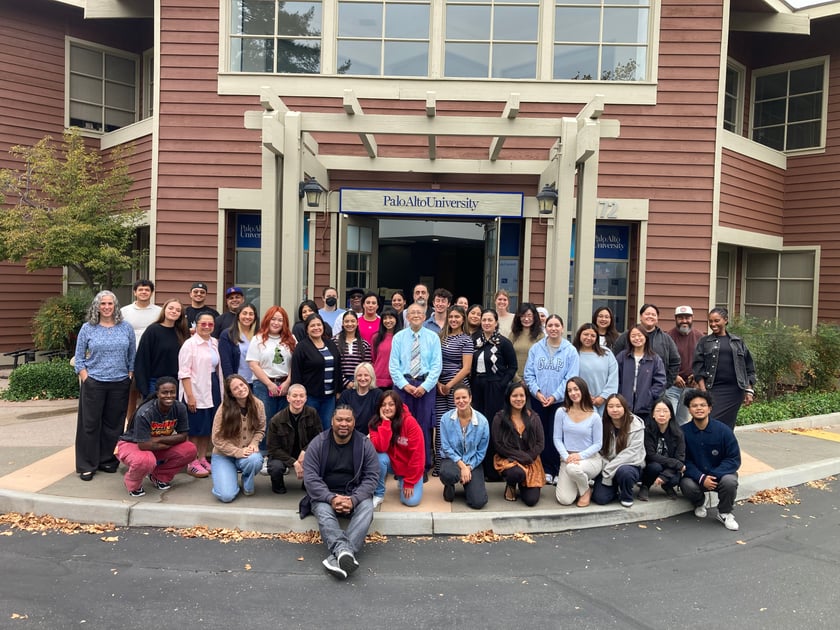
PALO ALTO, Calif. — As demand for mental health professionals continues to rise and artificial intelligence reshapes the future of work, more people are choosing careers built on human understanding. Palo Alto University (PAU) enrolled 324 new students this fall, up more than 13% from 286 a year ago. Total enrollment held steady at 1,161 students.
Two programs showed notable growth. New enrollment in the PhD in Clinical Psychology, PAU's founding program, rose 38%, from 47 students last fall to 65 this fall, reversing four consecutive years of decline. The Master of Social Work (MSW), now in just its second year, more than doubled its total enrollment, from 40 students to 82, a sign that PAU's investment in social work is meeting real regional demand. The undergraduate program and the new PhD in Counselor Education and Supervision also grew this fall, and enrollment in the MA in Clinical Mental Health Counseling remained steady.
"Our Fall 2026 enrollment reflects real momentum at PAU," said President Farouk Dey. "Every number represents a person who chose PAU to pursue their calling. We are honored by that trust and committed to delivering the excellence and stewardship our students deserve."
PAU's enrollment growth also comes amid rising demand for mental health care. The U.S. Bureau of Labor Statistics projects employment of substance abuse, behavioral disorder, and mental health counselors will grow 18% from 2025 to 2035, compared with 3% across all occupations.
Artificial intelligence is also transforming how work gets done across industries, raising new questions about how universities prepare students for an evolving workforce.
"As AI continues to advance, our understanding of human thinking, learning, and experience becomes more essential than ever," said Provost and Vice President for Academic Affairs, Dr. Christie Chung. “Culture and individual experiences shape how we understand and respond to the world around us. Recognizing those differences is essential to how we care for people, conduct research, and develop new technologies. At PAU, we're preparing students to bring that understanding to their work with scientific rigor, ethical judgment, and compassion.”
That preparation extends beyond the classroom. Across undergraduate, master's, and doctoral programs, students deepen their understanding of people through behavioral science, research, faculty mentorship, and opportunities for clinical and community-based experience. While their academic and professional paths differ, they learn to apply evidence, exercise sound judgment, and respond to complex challenges where the answers are rarely simple.
"The strength of this class signals that amid today’s technological revolution, there is a hunger for human understanding," said President Farouk Dey. "Behavioral science has never mattered more, and PAU has never been more ready to prepare tomorrow’s clinicians, counselors, and researchers."
Explore Palo Alto University Programs
Learn more about PAU's undergraduate, master's, and doctoral programs in psychology, counseling, and social work at paloaltou.edu/academic-programs.
About Palo Alto University
Founded in 1975, Palo Alto University (PAU) is a private, nonprofit university specializing in psychology, counseling, social work, and behavioral science. Through education, research, clinical training, and community partnerships, PAU prepares professionals and researchers to advance mental health and well-being. Learn more at paloaltou.edu.
Press Contact
Carlie Belmodis
Palo Alto University, Brand Office
communications@paloaltou.edu