Dr. Richard Tremblay presents keynote address at IAFMHS
Dr. Richard Tremblay presented his keynote address-- From Forensic Mental Health to


An Analysis of Problem-Solving Court Programs
An Analysis of Problem-Solving Court ProgramsPolicymakers, researchers

Dr. Rees Tapsell presents keynote address at IAFMHS
Increasing firearm responsibility and safety and reducing mental health stigma to allow

Madmen with guns: The relationship between mental health and mass shootings in the United States
Increasing firearm responsibility and safety and reducing mental health stigma to allow


Race and Ethnicity in Forensic Mental Health Reports: Biasing or Informative?
The reporting of the evaluee’s race or ethnicity (ERE) in forensic mental


Cultural Competence: More than a Catch Phrase
Forensic mental health professionals are increasingly tasked with evaluating defendants who are
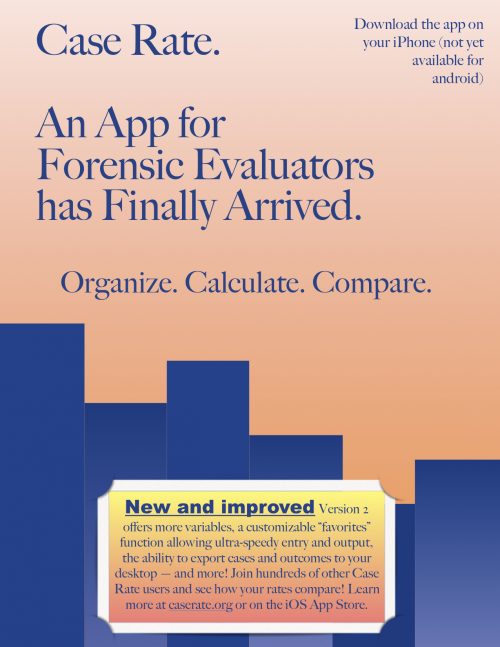
Case Rate – Organize, Calculate, Compare
Case Rate (www.caserate.org), developed by Dr. Neil Gowensmith and his team

Translating risk factors into treatment needs for juveniles with sex offenses
Shifting the focus from risk prediction to treatment and remediation can benefit

Impact of report framing on juvenile probation officers’ decision making
Findings from this study caution against using negatively framed language in court

The Dark Triad of Sex: Psychopathy, Deviant Sexual Interests, and Gender
The present study examined associations between psychopathic traits and deviant sexual interests

The virtue of similarity: Overcoming resistance in intelligence interviews through cooperative mindset
Creating a relationship with a subject that is based on similarities with

Fairness, objectivity, and probability: Perceptions of defendant’s future risk of violence by jurors
When testifying regarding violence risk assessment, the experts are advised to present