
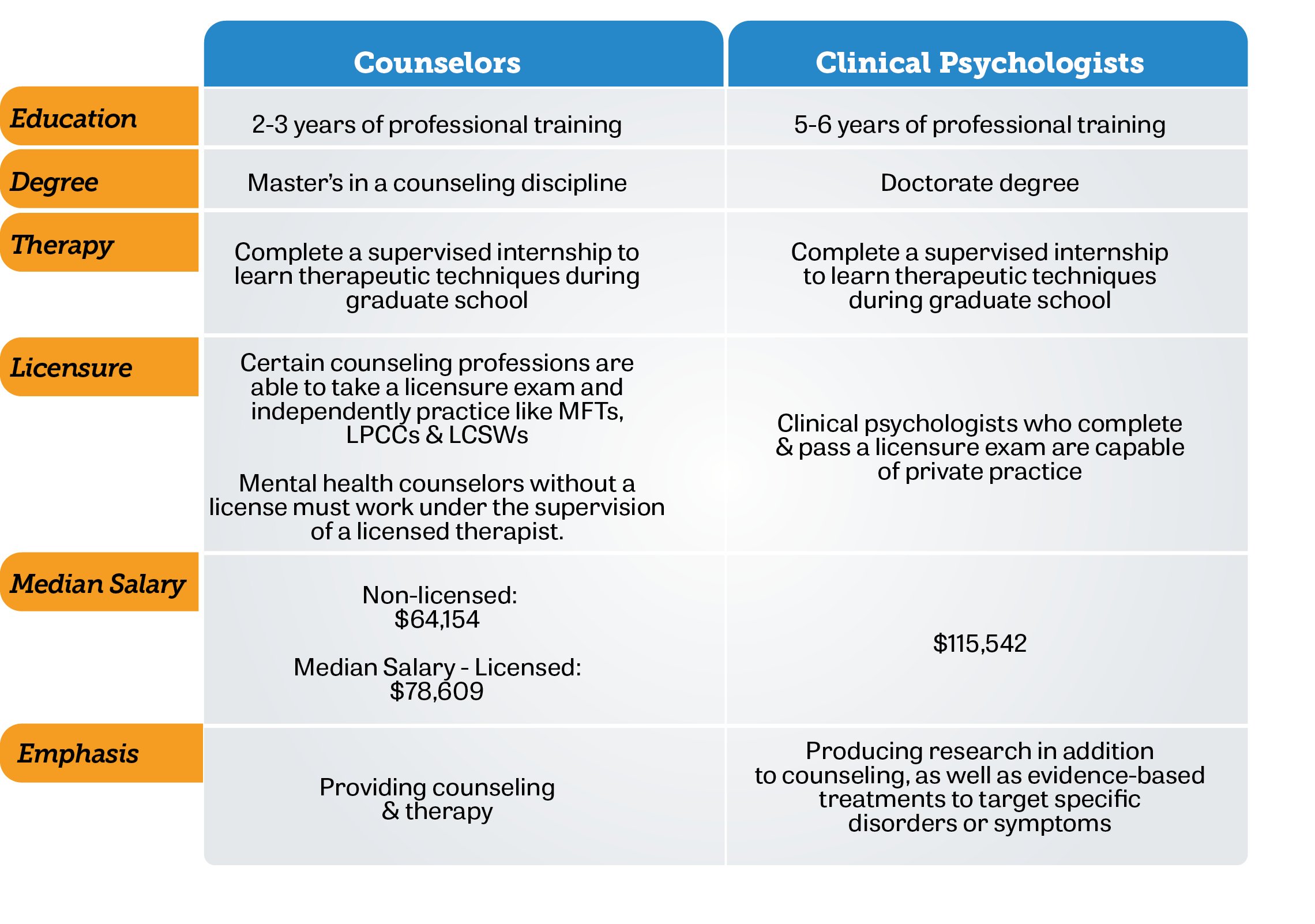
Clinical psychology and counseling both encompass roles in mental healthcare by diagnosing and treating clients, most commonly with talk therapy. Counselors and clinical psychologists who own private practices may have rather similar day-to-day agendas while other clinical psychologists who advance their careers outside of a traditional counseling role may deal with schools, courtrooms, corporations, or hospitals.
Clinical Psychology
Clinical psychology is the field of psychology concerned with clinical practice in addition to the research of the behavioral and cognitive processes behind clinical disorders. Clinical psychologists provide therapy independently, diagnose disorders, and construct clients’ treatment plans. Certain clinical psychologists become professors and conduct research on clinical issues.
The American Board of Professional Psychology classifies the below as a few of the fields available for specialization:
- Behavioral health
- Cognitive psychology
- Counseling
- Forensic psychology
- Child and adolescent psychology
- Couple and family psychology
- Police and public safety psychology
Counseling
Counseling primarily focuses on the therapeutic relationship between care provider and client. Counselors are able to see clients independently or under supervision, diagnose disorders, and construct treatment plans like clinical psychologists.
Additionally, counseling looks into the science of why counseling is effective and which therapy treatments prove themselves as evidence-based. For example, the APA lists cognitive behavioral therapy (CBT) and prolonged exposure as evidence-based treatment therapies for post-traumatic stress disorder (PTSD).
Clinical Psychology and Counseling Career Paths
Clinical psychology degrees are much more likely to end in a research-based or academic career compared to a counseling degree which often leads to a therapy provider role. There are also careers outside of academia which utilize the research of clinical psychologists such as forensics, police and public safety, and tele-health or digital healthcare providers. Outside of a customary therapy role, counselor careers include mobile crisis units, hospital assessment teams, and mental health nonprofits such as crisis hotlines or diversity initiatives.
Salary of a Mental Health Counselor
Salaries for a mental health counselor will vary depending on the effort spent on personal brand marketing or available organizational funding. Counselors need to factor cost-of-living expenses in their session pricing depending on their location. Mental health counselors require a marketing strategy in addition to legal consideration when they start a private practice in counseling and psychology.
According to the U.S. Bureau of Labor and Statistics, substance abuse, behavioral disorder, and mental health counselors make a median salary of $48,520 annually. A licensed mental health counselor makes on average $83,474 nationwide, according to ZipRecruiter which averages self-reports of compensation. Salaries can typically range from $30,000 - $150,000, depending on location and licensure.
Where to Work as a Mental Health Counselor
Mental health counselors work in an assortment of settings. Traditionally, mental health counselors provide counseling in an office space or remotely online. Additional ways to utilize a mental health counseling degree include working at a nonprofit or as a consultant to businesses regarding the mental health of their workers.
- Therapy Office
- Private Practice
- Nonprofit Organization
- Hospital Network

.jpeg)