- How Do I, as a Forensic Psychologist, Ensure My Criminal Court Testimony Reflects Sound Evidence?
- As I Testify as a Forensic Psychologist, How Do Judges and Attorneys Decide Whether I Am Relying on Sound Evidence?
- How Can I, as A Forensic Psychologist, Distinguish Sound Evidence From Pseudoscience in Criminal Court?
- How Can I, as A Forensic Psychologist, Protect Their Testimony From Junk Science Challenges?
- Why Do I, as a Forensic Psychologist, Risk Undermining Sound Evidence When I Overstate My Opinions
- What Risks Do I, as A Forensic Psychologist, Face When Sound Evidence Is Not Clearly Articulated?
- Conclusion
- Additional Resources
How Do I, as a Forensic Psychologist, Ensure My Criminal Court Testimony Reflects Sound Evidence?
In criminal court, sound evidence refers to expert opinions derived from scientifically reliable methods, appropriately applied, and transparently reasoned. Courts are less interested in whether forensic psychology can eliminate risk or error and more focused on whether an expert’s reasoning reflects accepted scientific practice and professional discipline.
As forensic psychologists, we must understand that sound evidence typically requires:
- Use of established methods and instruments
Examples:- Relying on validated assessment tools rather than idiosyncratic checklists or personal heuristics
- Selecting instruments with demonstrated relevance to the referral question (e.g., risk, competency, criminal responsibility)
- Avoiding methods that lack empirical support or fall outside professional consensus
- Relying on validated assessment tools rather than idiosyncratic checklists or personal heuristics
- Application consistent with manuals, research, and professional standards
Examples:- Administering, scoring, and interpreting measures according to published guidelines
- Using structured professional judgment tools as intended rather than converting them into actuarial scores
- Ensuring interview techniques align with best practices and avoid suggestibility or confirmation bias
- Consideration of alternative explanations and competing hypotheses
Examples:- Evaluating whether observed behavior could reflect situational stress, substance use, or malingering rather than psychopathology alone
- Actively testing disconfirming evidence instead of selectively emphasizing data that supports a referral source’s position
- Addressing inconsistencies across records, collateral information, and self-report
- Clear acknowledgment of limitations, uncertainty, and inferential boundaries
Examples:- Explicitly stating the limits of predictive accuracy and generalizability
- Distinguishing between data-driven findings and professional opinion
- Avoiding overstatement of conclusions when evidence is mixed or incomplete
In practice, this means anchoring opinions in established, well-validated methods and applying them consistently with professional standards and the research base. It requires transparency, which means considering and discussing alternative explanations, resisting overconfidence in conclusions, and acknowledging the data’s limitations. Courts are not looking for perfection; they are looking for testimony that is reasoned, methodological, and intellectually honest.
As I Testify as a Forensic Psychologist, How Do Judges and Attorneys Decide Whether I Am Relying on Sound Evidence?
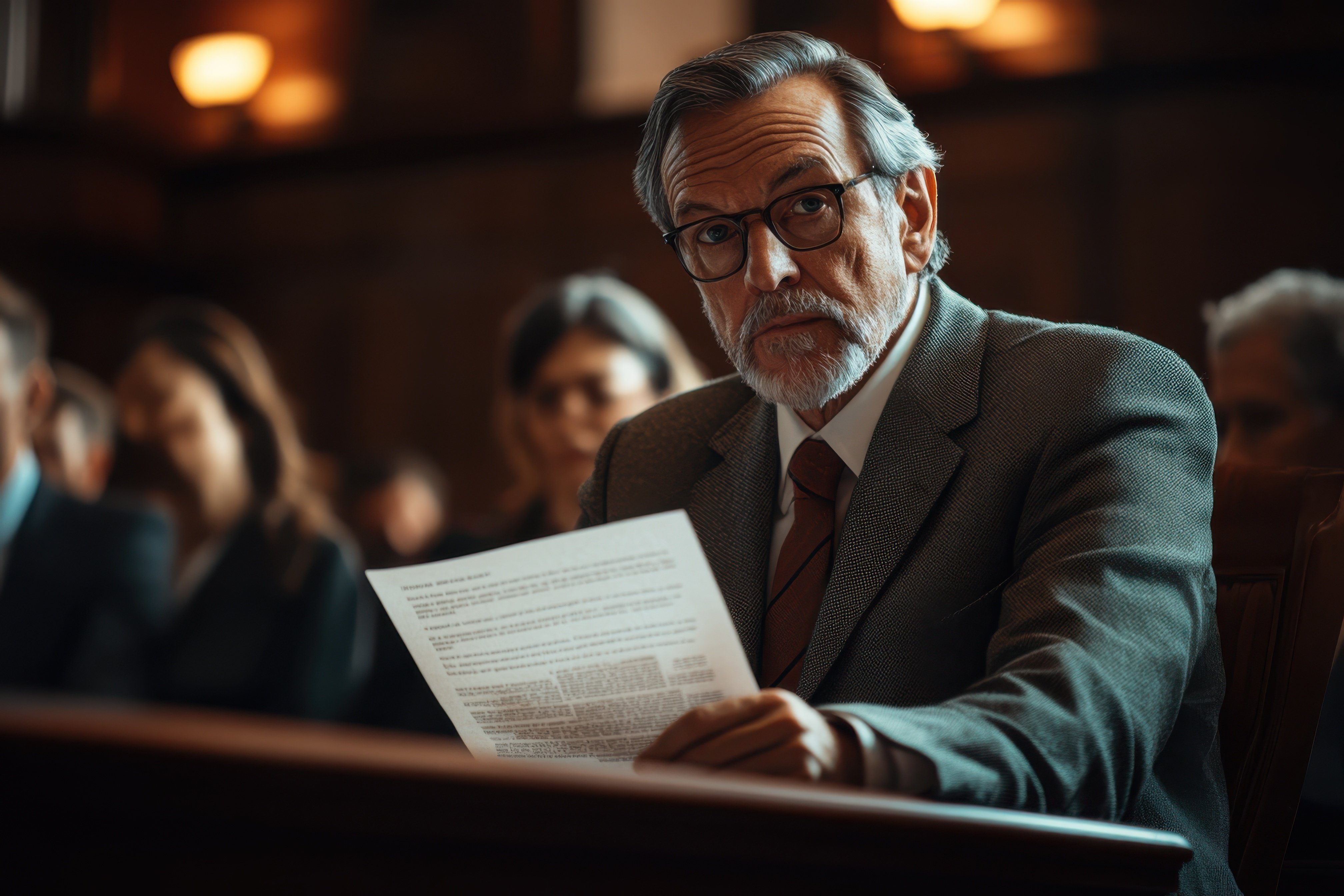
When we testify in criminal court, judges, juries, and attorneys are rarely evaluating our work solely by reviewing raw data. Instead, they listen to our reasoning and how well that reasoning holds up under questioning. What matters most is whether we can articulate the basis for the methods we used and show that our conclusions logically follow from the data.
The evaluation of us, and our work, often unfolds through targeted questions that probe our methodological discipline. We may be asked what research supports a particular conclusion, whether our approach is generally accepted by the field, or what alternative interpretations we considered and why we ruled them out. We are also likely to be pressed on the boundaries of our opinions, not to undermine our credibility, but to assess whether we can acknowledge uncertainty without retreating from professional responsibility.
As forensic psychologists, we should expect questions designed to probe these areas:
- “What research supports that conclusion?”
- “Is that generally accepted in your field?”
- “What alternative interpretations did you consider?”
- “What are the limits of that opinion?”
Consider a common cross-examination moment: an attorney asks whether another reasonable forensic psychologist could reach a different conclusion based on the same data. If we respond defensively or imply a level of certainty the science does not support, our testimony can quickly lose credibility. When we instead explain how alternative explanations were considered, how the data were weighed, and where reasonable professional disagreement may exist, we demonstrate the use of sound evidence. In these exchanges, courts are not deciding whether forensic psychology is perfect. They are deciding whether we are reasoning transparently, applying methods responsibly, and testifying with intellectual honesty.
How Can I, as A Forensic Psychologist, Distinguish Sound Evidence From Pseudoscience in Criminal Court?
In a forensic psychology context, pseudoscience may involve assessment tools or explanatory models that lack validation, are applied outside their intended purpose, or are promoted despite known limitations or negative findings. Courts are especially wary of such practices because they undermine the reliability of expert testimony. What distinguishes science from pseudoscience is not whether conclusions are controversial, but whether the methods used are transparent, testable, and open to revision in light of evidence.
Distinguishing sound evidence from pseudoscience is one of the most critical and vulnerable tasks in criminal court testimony. Pseudoscience often mimics the language of science but fails to meet its standards.
As forensic psychologists, we can distinguish sound evidence by asking:
- Is the method supported by peer-reviewed research?
- Are error rates, limitations, and boundary conditions known?
- Is the method applied as intended, or stretched beyond its scope?
- Does the opinion rely on data, or primarily on intuition and narrative?
Pseudoscientific testimony often reveals itself through overconfidence, vague constructs, unfalsifiable claims, or reliance on “clinical experience” without empirical grounding. Courts are increasingly skeptical of such approaches, particularly when liberty interests are at stake.
Case Example: A forensic psychologist testifies that a defendant is at high risk for future violence based on a proprietary “risk profile” the evaluator developed over years of practice. The method lacks peer-reviewed support, has no known error rates, and is applied flexibly depending on the case. When questioned, the psychologist relies on experience and narrative interpretation rather than data to defend the opinion.
In contrast, another evaluator in a similar case relies on a validated, research-supported method, applies it as intended, and clearly explains both its strengths and limits. By grounding conclusions in established science rather than intuition or untested frameworks, the second psychologist demonstrates sound evidence use, while the first raises concerns about pseudoscientific practice.
How Can I, as A Forensic Psychologist, Protect Their Testimony From Junk Science Challenges?
“Junk science” challenges do not require that an opinion be incorrect, only that it be poorly supported, poorly explained, or poorly applied. As forensic psychologists, we can protect our testimony by focusing on process rather than persuasion.
Protective practices include:
- Using multiple sources of data rather than single indicators
- Explaining how conclusions were reached step-by-step
- Avoiding absolute or deterministic language
- Explicitly stating what the evidence does not show
Courts are far more forgiving of cautious, well-reasoned opinions than of confident but unsupported assertions. Transparency is one of the strongest defenses against junk science challenges.
Why Do I, as a Forensic Psychologist, Risk Undermining Sound Evidence When I Overstate My Opinions
When we testify in criminal court, overstatement is one of the fastest ways to erode credibility. The pressure to provide clear and confident answers can be strong, particularly when attorneys press for certainty in emotionally charged or high-stakes cases. Yet courts are deeply wary of certainty in probabilistic domains. When our testimony sounds more definitive than the science allows, it can raise concerns about judgment, discipline, and reliability rather than reinforce expertise.
In practice, overstatement tends to take a few recognizable forms. It often appears when we move beyond what the data can reasonably support and begin to present conclusions with more confidence than is warranted. For example, overstatement may involve:
- Treating correlations as causal, such as implying that a diagnosis, trait, or risk factor directly caused criminal behavior, rather than acknowledging a more complex, associative relationship
- Presenting risk estimates as predictions, framing probabilistic findings as statements about what will happen instead of what is more or less likely based on available data
- Minimizing or overlooking alternative explanations, which can make testimony appear narrowly focused or aligned with one side rather than grounded in balanced analysis
- Downplaying uncertainty or limitations, especially when gaps in the data or methodological constraints are softened to make conclusions sound more decisive
Courts often respond more favorably when forensic psychologists resist these tendencies and instead demonstrate comfort with the boundaries of the science. Acknowledging uncertainty does not weaken testimony; it signals professional maturity and discipline. Judges, juries, and attorneys expect experts to understand where the evidence ends and to communicate those limits clearly.
How Do I Explain Limits Without Weakening My Testimony?
Effective testimony typically involves setting thoughtful boundaries around our opinions, including:
- Clarifying that conclusions reflect likelihood rather than certainty, particularly in areas such as risk assessment, future behavior, or mental state inferences
- Explaining why certain questions cannot be answered definitively, given current scientific knowledge, available data, or methodological constraints
- Distinguishing scientific opinions from legal determinations, reinforcing that it is the court’s role, not the experts, to decide ultimate legal questions
What Risks Do I, as A Forensic Psychologist, Face When Sound Evidence Is Not Clearly Articulated?
When sound evidence is not clearly articulated in criminal court, the risks we face are often significant and cumulative. Importantly, these risks rarely arise simply because of what opinion we offered. More often, they stem from how that opinion was explained. In courtroom settings, sound evidence must be visible in our testimony; it cannot be assumed based on credentials, experience, or good intentions.
When our reasoning is unclear, incomplete, or difficult to follow, courts may respond in ways that directly affect our professional standing. This can include:
- Exclusion or limitation of testimony, particularly when judges conclude that the reasoning process cannot be adequately evaluated
- Judicial criticism of methodology, including concerns about how methods were selected, applied, or justified
- Damage to professional reputation, especially when testimony is characterized as unclear, overstated, or poorly supported
- Increased vulnerability to ethics complaints or appeals, where ambiguity in reasoning becomes a focal point for challenge
What is striking in many of these situations is that the underlying opinion itself may not be extreme or unreasonable. Rather, the difficulty arises when the court cannot clearly see how we moved from data to a conclusion. When sound evidence is not explicitly articulated, even well-grounded opinions can appear speculative or inadequately supported.
This is why a sustained commitment to sound evidence is central to expert credibility in criminal court. Our authority does not come from credentials alone, but from our demonstrated ability to navigate uncertainty responsibly and transparently. Courts rely on forensic psychologists not to eliminate ambiguity, but to manage it with discipline and care.
When our testimony is grounded in sound evidence, several things happen. Courts can evaluate our opinions fairly, attorneys can challenge them appropriately without distorting the science, and legal decisions rest on a more reliable foundation. When that grounding is absent or unclear, however, forensic psychology itself becomes vulnerable to criticism. Over time, this erodes not only individual credibility but also confidence in the field.
Conclusion
As forensic psychologists testifying in criminal court, we must treat sound evidence as the cornerstone of expert practice. It is what distinguishes reliable forensic opinion from speculation, advocacy, or pseudoscience. Grounding our testimony in sound evidence requires disciplined methodology, careful reasoning, transparent acknowledgment of limits, and ethical restraint. In high-stakes criminal proceedings, these qualities do more than protect our opinions; they protect the integrity of forensic psychology itself.
In an adversarial system designed to test expert claims, sound evidence is not simply a best practice. It is the standard by which our credibility, competence, and professional judgment are ultimately assessed.
Additional Resources
Training
- Criminal Forensic Assessment Certificate
- Identifying and Avoiding “Junk Science” in Forensic Psychological Assessments
- Effective Expert Testimony for Forensic Evaluation
- AAFP: Ethical and Effective Expert Testimony
- AAFP: The Art and Science of Expert Witness Testimony
- AAFP: Evidence-Based Evaluation of Criminal Responsibility
- Evidence for Forensic Mental Health Professionals?
- AAFP: The Brain, Behavior, and the Legal System: Fundamental Neuropsychology for Forensic Evaluators
Blog Posts

.jpeg)