- What Makes Parent-Child Observation Central to a Reliable Parenting Capacity Assessment that’s Consistent Throughout an Organization?
- How Can Training Online Build Consistent Observation Skills Across Behavioral Health Staff and Social Workers at Large Organizations?
- What Should a Director Look for in a Training Curriculum Serving Both Mental Health Staff and Social Workers?
- How Should Online Child and Adolescent Behavioral Health Training Scale and Customize Across a Large Organization?
- Conclusion
- Additional Resources
What Makes Parent-Child Observation Central to a Reliable Parenting Capacity Assessment that’s Consistent Throughout an Organization?
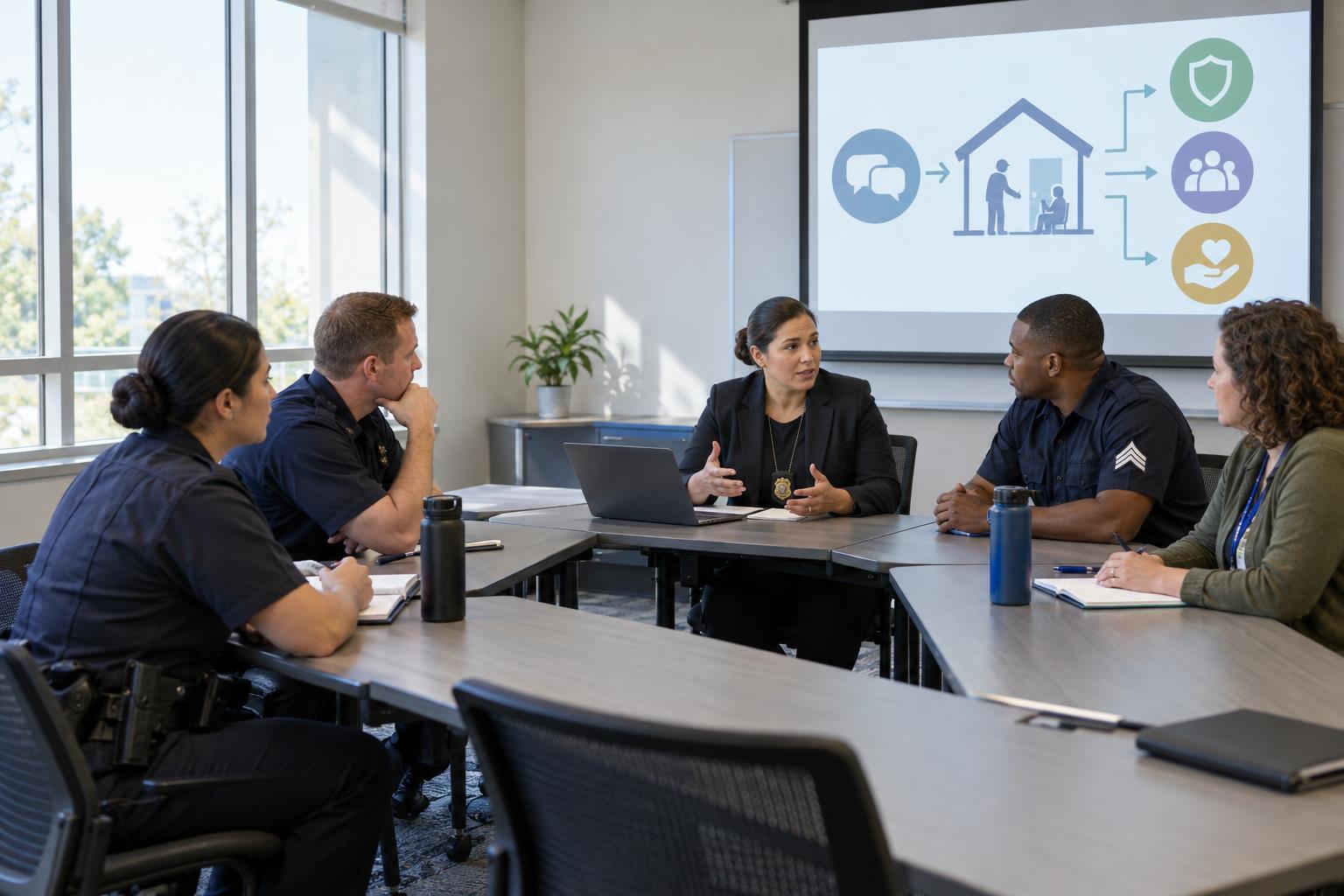
Observation is among the core methods of a parenting capacity assessment because it provides an essential complement to interviews. A parenting capacity assessment combines clinical interviews, psychological testing, behavioral observations, and collateral information to build a structured, evidence-based picture of a parent's ability to meet a child's needs. Interviews reveal how a parent conceptualizes their relationship with their child. Observation shows how that relationship functions, such as how a parent responds to a child's distress, where they set limits, and when the child seeks or avoids connection with their parent. Structured observations of parent-child interaction reveal dynamics that may not surface in interviews alone.
Evaluators need training to conduct these observations systematically, since behavior in a structured setting does not always reflect a family's typical patterns at home. Training helps adjust for differences in background and life experience between evaluators to produce consistent results across a large organization. Evaluators learn to distinguish a single stressful moment from a durable pattern, by giving every evaluator on staff the same standard for what counts as clinically significant. Because untrained evaluators are likely to offer different interpretations of the same observation, group training across an organization that sets specific standards is key to consistency and reliability.
Behavioral observation research outside the forensic context reinforces the value of a structured approach. Established coding systems for parent-child interaction, such as the Dyadic Parent-Child Interaction Coding System, maintain their value because they rely on well-defined categories applied through direct observation, producing adequate interrater reliability across different observers. This level of professional reliability comes from training, not instinct. Evaluators achieve reliability by learning to apply defined categories the same way every time, whether they are watching a videotaped interaction in a research setting or sitting in the room during a live evaluation. A training program worth purchasing should teach staff to observe with that same level of structure and produce consistency across staff. A high quality group training program provides common methods, standards, and vocabulary across an organization.
Inconsistent structure and methods in parent-child observation creates risk for an organization. When standards of staff vary from one evaluator to the next, families receiving evaluations from different staff members can come away with substantially different findings. This inconsistency undermines the credibility of the organization, its ability to deliver defensible evaluations, and potentially invites unwanted scrutiny in court. Consistent training keeps a large staff's judgment aligned, anchoring the quality of a family's evaluation in sound methodology, applied reliably by all evaluators on staff.
How Can Training Online Build Consistent Observation Skills Across Behavioral Health Staff and Social Workers at Large Organizations?
A single well-trained evaluator can develop sound observational judgment over years of supervised practice. However, informal mentorship, for all its merits, is difficult to scale and produces uneven standards from one evaluator to the next. A large organization needs a faster, more deliberate path to that same judgment across dozens of evaluators working different caseloads. A strong training program compresses years of accumulated experience into a structured curriculum that staff can apply from their very first case.
Parent-child observation works best as one integrated piece of a larger skill set. A well-built program places observation alongside the other essential elements of a parenting capacity assessment, including parent interviews, child interviews, collateral sources, psychological testing, and the risk and protective factors relevant to child maltreatment. Staff who learn to connect their observation findings to these other data sources develop a more holistic, better-calibrated picture of each family, weighing what they observe against what they hear from parents, children, and outside sources.
Research-based methodology and procedures on coding parent-child interactions is what separates a rigorous parenting capacity assessment from a set of general impressions. Organizations evaluating vendors to train a staff of providers working with child and adolescent clients should look for a curriculum that names its observational framework explicitly and gives staff structured opportunities to practice applying it to real scenarios. Using a specific framework makes the skill set teachable and repeatable across a large group.
Practice opportunities matter as much as the framework itself. A program that walks staff through case examples, sample observation scenarios, or recorded interactions gives evaluators a chance to apply the framework and compare their conclusions against an expert benchmark before they carry that judgment into a live evaluation. This kind of built-in practice is what turns a lecture on observation methodology into an actual skill staff can rely on under real conditions, with real families, where the stakes of a misread interaction are far higher than in a training exercise.
What Should a Director Look for in a Training Curriculum Serving Both Mental Health Staff and Social Workers?
A staff composed of behavioral and mental health professionals and social workers brings a mix of training backgrounds, licensing requirements, and familiarity with forensic methodology into a single professional environment. A strong vendor prepares for that diversity of backgrounds and expertise.
Accreditation provides a useful, concrete signal. A training program built for a cross-disciplinary team should carry continuing education approval from the boards relevant to each profession represented on staff: the American Psychological Association for psychologists, the Association of Social Work Boards for social workers, and the National Board for Certified Counselors for counselors. A program with this multi-board approval lets an entire staff, with differing types and levels of expertise, complete the same training and secure credit that counts toward each person's licensure.
Content depth matters just as much as accreditation. A curriculum built by a presenter with credentials in child and adolescent behavioral science, delivered in partnership with a recognized professional body in the field, signals that the content has been vetted against current practice standards. A program covering case law relevant to the settings your staff works in, alongside the practical mechanics of conducting and documenting an observation, gives evaluators the context to understand why the method works, as well as the steps required to follow it.
Cultural and contextual competence deserves explicit attention, too. Parenting looks different across families, and applying an observation framework with attention to cultural context helps evaluators accurately read normal variation, distinguishing it from behavior that signals risk to a child. A well-built program folds gender and cultural considerations directly into its observation and assessment content, treating them as inseparable from good methodology.
How Should Online Child and Adolescent Behavioral Health Training Scale and Customize Across a Large Organization?
Purchasing training for an entire department carries considerations that might not factor into selecting a program for a handful of evaluators. A large organization benefits from a vendor offering tiered options focused on cost savings at scale, since group pricing and simplified enrollment enable a director to extend consistent training much further across the organization. A vendor that allows your organization to assign different courses to different staff members within one coordinated purchase gives a director valuable flexibility, since a social worker supporting the evaluation process and a licensed psychologist conducting the full assessment can each receive training scoped to their role.
Online delivery supports this kind of scaling well. A systematic review of more than 1,000 empirical studies found that online training programs are as effective at achieving learning goals as in-person training, and that online formats produce more standardized delivery than completely live sessions, where content can shift from session to session depending on the trainer or the group. For a director training staff across multiple sites or shifts, asynchronous, online courses mean every evaluator receives the same foundation regardless of when or where they complete the course. New hires can also start their training on a rolling basis as soon as they join the team, keeping the whole department's competency current between scheduled cohorts.
Customization becomes especially valuable when an organization's caseload has a specific profile, such as a high volume of cases involving substance use, intimate partner violence, or reunification following removal. A training partner willing to consult on an organization's specific needs and build a curriculum around them can align training directly with the cases staff actually handle. This makes the training directly applicable to the work, instead of forcing staff to fit broader concepts to their specialized field. For example, in parent-child observation, a standardized, organization-wide training approach turns individual evaluators' skill into a repeatable institutional standard, one that holds up whether the evaluation is conducted by a junior staff member or a senior clinician.
Conclusion
A strong online parenting capacity assessment program teaches observation as a structured, defined methodology, built from named procedures that staff can practice and repeat. It integrates that methodology with the other core elements of a parenting capacity assessment, including interviews, collateral information, and risk assessment, so staff learn to weigh observation findings alongside everything else they gather. It carries accreditation and content depth appropriate for every discipline on your staff, and it scales and customizes to your organization's size and caseload, matching training depth to the specific role each staff member plays.
A clinical director that holds training curriculum partners to this high standard develops a staff capable of producing parenting capacity assessments that courts and families involved can trust. Consistent, well-trained observation turns a subjective impression into defensible evidence, and it deserves the same level of scrutiny a director would apply to any other clinical competency the organization depends on.
Additional Resources
eBook
Training
- Training for Staff, Teams and Groups with CONCEPT
- CONCEPT Group Training
- AAFP: Parenting Capacity Assessments in Child Protection Court
Blog Posts
- What Best Practices Should I Follow as a Forensic Psychologist When Conducting Parenting Capacity Assessments (PCAs) in Custody Evaluations?
- What is Online Training?
- How Should I, as a Forensic Psychologist, Structure Custody Evaluation Reports to Maximize Clarity, Credibility, and Judicial Impact?
- Case Study: The State of New Jersey
- How Should Forensic Psychologists Assess Parental Alienation Claims in Child Custody Evaluations?

.jpeg)