- How Does the Juvenile Adjudicative Competence Interview (JACI) Help Evaluators Apply the Dusky Standard to Youth?
- What Should Evaluators Learn About Distinguishing Developmental Immaturity From Mental Illness Using the JACI?
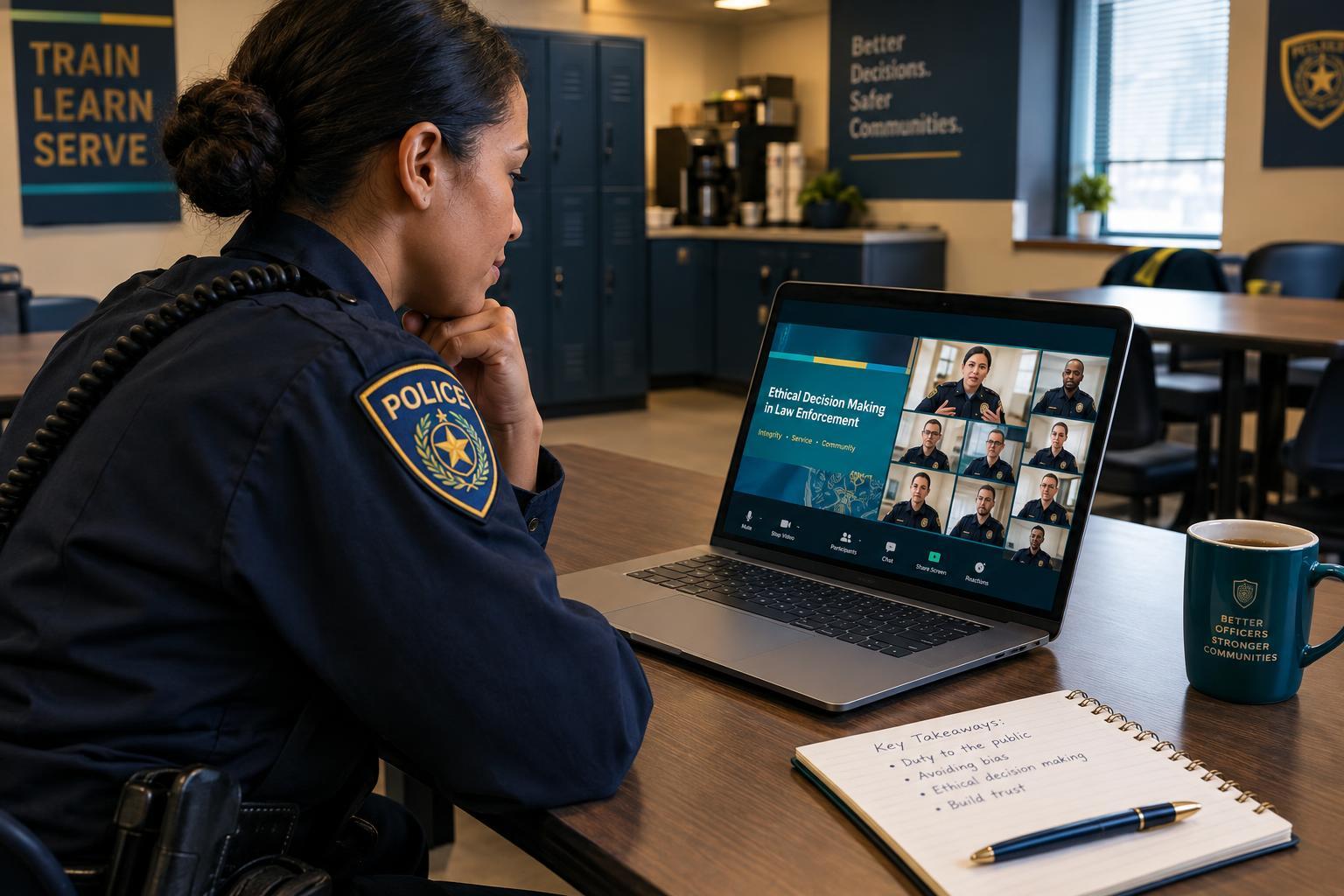
- How Do Staff Psychology Training Workshops Online Prepare Clinicians to Assess a Youth's Capacity to Assist Counsel?
- How Can Forensic Evaluators Integrate JACI Results Into Remediation Recommendations?
- Which Training Format Is Best for Building Confidence in Administering and Interpreting the JACI?
- How Can Training Directors Measure the Impact of JACI Training Across Forensic Programs?
- Conclusion
- Additional Resources
How Does the Juvenile Adjudicative Competence Interview (JACI) Help Evaluators Apply the Dusky Standard to Youth?
The Dusky standard comes from the 1960 U.S. Supreme Court case Dusky v. United States. It is the baseline test for whether someone is competent to stand trial. The standard is commonly organized into three functional areas, or prongs, which a defendant must have to legally establish competence:
- Factual understanding of proceedings (the defendant knows what a trial is, what the charges are against them, and who the judge and prosecutor are)
- Rational understanding of proceedings ( the defendant grasps how all of that applies to their own situation)
- The capacity to consult with counsel with a reasonable degree of rational understanding (the defendant is able to work with and help their defense attorney)
Although the landmark Dusky case involved an adult, states have since applied the same standard, or versions of it, to juveniles. Adults are usually found incompetent because of mental illness or intellectual disability, but young people can also fall short simply because of developmental immaturity. For example, a youth might correctly define a prosecutor’s role but believe the prosecutor will dismiss their case after hearing an apology, thus failing to meet the rational understanding prong of the standard. Younger adolescents also tend to underestimate long-term consequences and have difficulty weighing plea bargains. In a five-year review of 649 Colorado youth competency evaluations, evaluators found 83% of youths 12 and under incompetent.
The JACI, developed by forensic psychologist Thomas Grisso, is a semi-structured interview used in evaluating juveniles’ competence. Its questions address the nature of the offense and possible pleas, as well as the roles of courtroom participants, such as the prosecutor and defense attorney. Rather than producing a single score, the JACI organizes a youth's responses so evaluators can map each answer to a Dusky prong. The interview also allows evaluators to teach a missed concept and later check whether the youth has retained it, helping them determine whether the youth has the ability to learn.
Because the JACI doesn’t use a score to determine competence, the quality of its conclusions rests on evaluator judgment. Two evaluators can hear the same answer about a plea offer and reach different opinions. A 2025 study in the Journal of the American Academy of Psychiatry and the Law reviewed competence reports for 73 Massachusetts youth and found that only 19% included any data on maturity, usually in the form of a conclusory statement without supporting evidence. For training directors working with forensic psychologists, uneven interpretation across a team creates legal exposure and makes quality oversight difficult.
What Should Evaluators Learn About Distinguishing Developmental Immaturity From Mental Illness Using the JACI?
Similar interview responses can arise from different underlying difficulties. A youth might give the same answer for very different reasons: immaturity, an intellectual disability, mental illness, or a complex constellation of factors. Research on intellectual disability and adjudicative competence evaluations in adults found that only 19% of adult defendants with intellectual disability were opined competent, and nearly one in four were opined unrestorable at the initial evaluation.
Deciding whether a youth’s limits come from immaturity versus mental illness or disability, and whether they could be taught the missing skills, depends heavily on how the evaluator was trained to think about those questions. The JACI is an interview, not the entirety of the competence evaluation. Evaluators need to consider developmental history and information from other sources before drawing a conclusion. School records may clarify longstanding learning difficulties. Treatment records can help establish whether a change in legal functioning coincided with psychiatric symptoms. Training should require evaluators to explain the likely source of a limitation in their reports and identify uncertainty when the evidence is incomplete.
A study on assessing racial effects on adjudicative competence of 200 pretrial defendants found that Black defendants were more likely than White defendants to be referred for psychological testing. An ideal and comprehensive training program for upskilling forensic psychologists will pair juvenile competence content with courses on reducing bias and error in forensic judgment, so evaluators learn to attribute a deficit to its source with the same standard of evidence for every youth.
How Do Staff Psychology Training Workshops Online Prepare Clinicians to Assess a Youth's Capacity to Assist Counsel?
Capacity to assist counsel covers a youth's ability to share relevant information with an attorney and to use legal advice meaningfully. This ability includes weighing plea options and making decisions under pressure, such as a plea offer that expires at the end of a hearing. Youth often struggle most in these areas because the tasks depend on future orientation and resistance to adult influence, two capacities that develop through adolescence.
In a study surveying 199 defense attorneys about their experiences raising the issue of competence in juvenile and criminal court, the inability to assist counsel ranked among the main reasons attorneys raised concerns. Attorneys who had raised the issue did so more often for juvenile clients than for adults. In the JACI, questions such as "What would you do if your lawyer told you to take a deal you didn't like?" reveal whether a youth can reason through a decision or simply defers to the nearest adult.
Research confirms that training changes how professionals conduct interviews in legal settings. In a study of 340 experienced police officers, those trained in a specific interrogation method were significantly more likely to use its techniques. The same study found that officers questioned juveniles in much the same way as adults. For forensic psychology evaluators whose experience is primarily with adults, juvenile competency evaluations may also call for approaches beyond those used in their usual work. Targeted training can help evaluators become more reliable and consistent in applying the Dusky standard to JACI findings.
How Can Forensic Evaluators Integrate JACI Results Into Remediation Recommendations?
If an evaluator concludes that a youth isn’t competent to stand trial, the court needs to know whether that can change and, if so, how. The remediation recommendations answer that question. While adult cases focus on restoring competency, juvenile cases refer to “remediation” because a young person needs to gain competence, rather than get it back.
Remediation recommendations usually cover the following elements:
- The likelihood that the youth will attain competence within the time allowed by statute
- The services most likely to help, such as education on court procedures or psychiatric treatment
- The least restrictive setting, with home or community settings preferred over inpatient care
- A realistic time frame and a plan for checking progress
Evaluators can base much of a remediation recommendation on the JACI. The youth’s answer to each question shows which court concepts they don’t understand and which part of the Dusky standard each gap falls under. The teach-and-recheck format adds a second layer of evidence, since a youth who learns a concept during the interview and explains it accurately 20 minutes later has demonstrated capacity to learn. A youth who cannot retain the concept, even after repeated teaching, presents a different prognosis.
Staff evaluators should learn a consistent process for turning JACI results into recommendations, including:
- Tying each remediation recommendation to a specific deficit uncovered in the interview.
- Citing the youth's response to teaching during the interview as evidence of learning capacity.
- Recommending education for knowledge gaps and treatment for symptoms of mental illness.
- Recognizing when time is the main remedy. Evaluators in the Colorado study viewed remediation as unlikely to succeed for many youth 12 and under, because maturation cannot be compressed into a statutory window.
- Setting checkpoints that test rational understanding as well as factual recall, so that a youth who memorizes definitions is not mistaken for one who can apply them.
- Stating when attainment is unlikely so the court can consider other options rather than extending a remediation period without purpose.
Which Training Format Is Best for Building Confidence in Administering and Interpreting the JACI?
Forensic evaluators and clinicians can build their skills and experience with the JACI through four learning experiences:
- Online, live training
- Online, on-demand, asynchronous training
- In-person live training
- Hybrid
Online live training brings evaluators together in a virtual session at the same time, each from their own location. Participants can ask questions, talk through difficult interview scenarios, and receive feedback on administering and interpreting results. A case study of practitioners in Australia describes a customized live program tailored to participants' time zones and advanced learning needs.
Online, on-demand, asynchronous training provides every evaluator with the same foundation for administering and interpreting the JACI for juvenile court. Through video lectures and supporting coursework, evaluators can learn at times that fit their schedules, easily revisit material, and receive the same training regardless of when they start. Sample cases with JACI responses and worksheets for developmentally appropriate interviewing enable participants to translate concepts from theory into practice.
In-person live training gathers a group of forensic evaluators together in the same space for real-time learning, engagement, hands-on experience, and feedback. In-person training requires travel, release time, and repeat sessions. For those reasons, it often works best as part of a longer partnership between an organization and a training provider, and is well suited for a concentrated cohort of evaluators or supervisors.
Hybrid training combines two or more of the above learning formats to best suit an organization's needs. For example, new hires complete the on-demand modules and join the next live session to gain experience interviewing and interpreting results. State-level training programs in Utah and Colorado show the benefits of different training formats. The right mix depends on staff roles, geographic spread, budget, and the level of skill the organization expects evaluators to demonstrate.
How Can Training Directors Measure the Impact of JACI Training Across Forensic Programs?
The most reliable evidence of training impact is in the reports forensic evaluators write afterward. Training directors can score a sample of competency reports from before and after the training to assess improvement relative to a baseline. For example:
- How consistently a report ties a competency deficit to a specific JACI prong
- How consistently a report names the source of an incapacity with supporting evidence
- Whether the remediation opinion gives a likelihood, a proposed intervention, and a realistic timeframe for remediation
There are metrics beyond the report that directors can track as well, such as how often courts adopt evaluators' remediation recommendations, and how long each case takes from referral to opinion. Programs with a shared training portal simplify reporting.
Conclusion
The JACI provides forensic evaluators with a structured way to ask questions to assess whether a youth meets the Dusky standard of adjudicative competence. The interview yields reliable results when every evaluator on a team is trained the same way in administering and interpreting it. Consistency also protects the youth at the center of each evaluation. A 14-year-old’s path through juvenile court should not hinge on which evaluator happened to receive the referral. Adolescents change quickly, so any competence opinion captures one moment in a young person’s development. Training that teaches evaluators to account for the nuances of development and maturity and to show their reasoning for a given assessment helps standardize how the Dusky standard is applied in juvenile court.
Additional Resources
eBook
- The Forensic Psychologist As Risk Assessor
- Child Custody Evaluation and Parenting Plan Evaluation eBook
- The Criminal Court Expert
Training
- The Five Question Model in Juvenile Competency Evaluation
- Evaluating Youth for Long-Term Sentences: Cases & Issues
- Forensic Evals & Social Media: Legal, Ethical, & Insights
- Adverse Childhood Experiences (ACEs) in the Criminal Justice System
- ASD & FASD: Similarities, Differences, Clinical & Forensic
- Executive Dysfunction & Theory of Mind Deficits
- Fetal Alcohol Spectrum Disorder & Suggestibility
- Juvenile Assessment & Waiver Evaluation: Key Issues & Best Practices
- Forensic Mental Health Report Writing: Best Practices
- NYSAP: Juvenile Competency Evaluations—Best Practices
- Neurodevelopmental Disorders & Trauma in Psycholegal Setting
- Suggestibility in Children: Clinical and Forensic Considerations
- SAVRY Overview: Youth Violence Risk Assessment & Management
- START:AV Training: Adolescent Risk Assessment & Intervention
- PsychopathyIs: Conduct Disorder, Aggression & Treatment
- Youth Justice: Addressing Behavioral Health in Corrections
Blog Posts
- Are Youth 12 and Under Truly Competent to Proceed with Trial? Adjudicative Competency in Juveniles
- Certificate in Juvenile Forensic Assessment | CONCEPT @ PAU
- Attorneys’ perspectives on their clients’ abilities to plead guilty
- Intellectual Disability and Adjudicative Competence Evaluations
- CONCEPT and PAU Celebrate Launch of University’s New Division of Continuing and Professional Studies at AP-LS
- Add to Your Career in the New Year
- What is Online Training?
- Case Study: RSVP Training Australia
- Training Influences Technique When it Comes to Police Interrogation
- Case Study: The State of New Jersey - CONCEPT Professional Training
- Case Study: The State of Utah - CONCEPT Professional Training
- Case Study: The State of Colorado